Prop Pitch Study 3-13-05
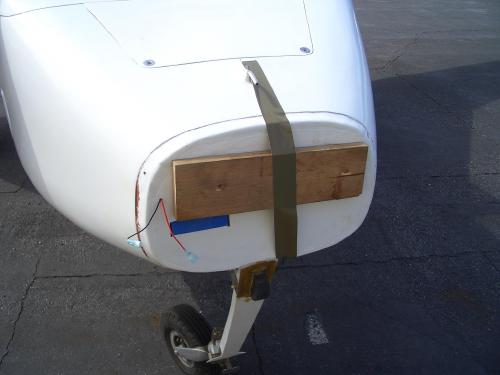
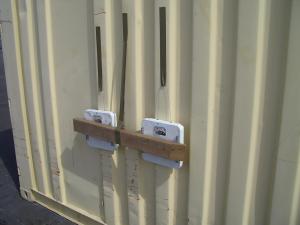
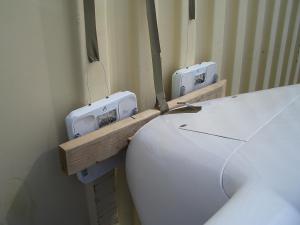
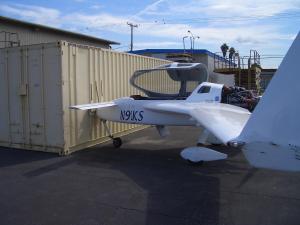
Since I've finished my official test period, I'm going to stop logging flight by flight but discuss topics that I am looking into. I've been trying to properly match my prop and engine since the beginning, about a year now. From my first run up I have been unable to get more than 1946-2011 static RPM. I started off with a prop that Sensenich designed based on 230 hp, cruise of 200kts, and peak power at 2919 RPM. They said the same prop that they use for the IO-360 would be right. That was a 2 bladed 70x89. At first I thought I had an engine problem and tried many changes to the computer to be sure that was not a problem. The Subaru computer looks at a bunch of signals that make sense on the car but are not used on the airplane. I made sure these were properly simulated so that no error signals showed up on the Subaru diagnostic read out. In particular the Park and Neutral switches need to be set and there has to be a "vehicle speed" signal. This is normally from the transmission on the car, sensing wheel speed. I at first simulated this using a modified tachometer signal but that made the computer think that the "car" was going 180mph at 1946 RPM (prop). So now I have switched to an injector pulse and get 28 mph at 1946 RPM. Both of these give the same results at static RPM. I haven't tested the latter at high speed cruise. It is possible that the 2649RPM that I see there may be limited since the computer could be sensing an over speed since it thinks the "car" is going 245mph. I also read out timing data and MAP vs. RPM, and had a Subaru expert look it over, he thought it was normal. So I feel comfortable that the engine is running normal. Plus the power/speed/drag data I took indicates that there is good correlation, at least at the high speed end. Below 120 kts I get large discrepancies that could be due to propeller inefficiency or poor engine performance. After that I decided to borrow another prop that might get more RPM. This was a Catto 3 bladed prop that was 68x84. I did fly with that but it did not get any more static than the Sensenich. Later I put the Sensenich on and flew it. Again the static was the same. It also got the same RPM at high speed cruise topping out at 2649-2700 at about 150 kias at 5500'. Both the static and the high speed end are low. I decided I wanted a spare prop anyway so I told Sensenich what I had found. They said that a 4" pitch change should raise the RPM by 200 RPM. That would put me at 2900 at the high end, where I would like to be. I thought that the static case would come up more since I am operating on the sloping part of the torque curve there. So I bought a 70x86 pitch. It got the same static and cruise RPM as the other 2. So I thought perhaps the first prop was off a bit. I asked Sensenich to re-pitch it to 4" lower than it was. They checked it and said it was within limits of the desired 70x89 and they repitched it to 70x85. I flew that and got the same RPMs at both ends. At my wits end, I decided I had to figure this out myself. I figured the pitch at the 3/4 radius for the 89" pitch is about 28 deg. Changing to 85" pitch changes it to about 26.5 deg. This is less than a 5% change. This is within the measurement range I had been seeing and less than half the amount Sensenich expected. I decided I needed to see what a bigger change in pitch would do. Luckily, I found a guy on my airport that had a ground adjustable IVO 3 bladed prop that I could fit. It was designed for a smaller Subaru but the same gearbox. It was a 66.5" diameter and could be set at pitches from 28deg to 16 deg. I set it to 28 since I thought my big Subaru 6 cylinder would over power it. I was shocked when it would only spin up to 1622 RPM! I had to reduce the pitch to 21 deg in order to get up to the desired 2270 static RPM. OK so I proved that my engine would turn "a" prop to 2270 if I lower the pitch enough. That doesn't mean that I'm getting good thrust for takeoff. I could have lowered the pitch so much that all the power is going into parasitic drag. I had a brilliant idea. I took two bathroom scales (300lbs each) and hung them on a Sea Container wall next to my hangar. I put a 2x4 to bridge the 2 scales. I took the nose cone off my airplane which leaves a flat bulkhead on the front. Then put the nose of the airplane up against the 2 scales. I took a 3rd scale and pushed on the back of the airplane. The back and front scales agreed, at least up to the 60 lbs I could push by hand. |